 Reviews



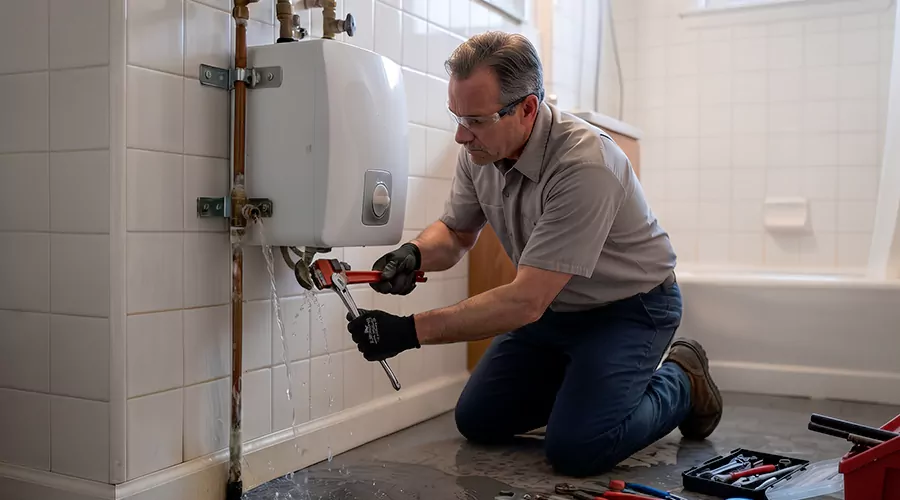
A water heater overflow pipe usually leaks because the temperature-and-pressure relief valve is releasing water or has developed a sealing problem. Excessive water pressure and thermal expansion are possible causes. A malfunctioning temperature-control system can create a more serious condition. Water heater installation can provide a properly sized and configured replacement when an existing water heater reaches the end of its service life.
The pipe commonly called the overflow pipe is usually the discharge pipe connected to the heater's temperature-and-pressure relief valve.
This distinction matters because the pipe is part of a safety system. Blocking it to stop dripping can create a dangerous condition.
What Does a Water Heater Overflow Pipe Do?
A water heater's temperature-and-pressure relief valve protects the storage tank against excessive internal pressure or temperature. When the valve opens, its discharge pipe carries hot water toward a designated discharge location.
The pipe itself does not normally cause the valve to release water.
A properly functioning residential relief valve remains closed during ordinary operation.
Watts states that many residential temperature-and-pressure relief valves are rated to open at approximately 150 psi or 210°F. These are common ratings rather than universal specifications for every model.
The rating on the installed valve and the heater's manufacturer instructions must take priority.
What Are the Most Common Causes of Overflow Pipe Leakage?
Several conditions can cause water to emerge from a water heater's relief discharge pipe. Some involve increased system pressure. Others result from valve damage or abnormal heating.
The main causes include:
- Thermal expansion: Heated water expands inside a plumbing system that cannot accommodate the increased volume.
- Excessive supply pressure: Incoming water pressure contributes to unsafe operating conditions.
- Defective relief valve: The valve no longer seals correctly.
- Incorrect valve selection: An unsuitable replacement valve has been installed.
- Temperature-control failure: The heater produces excessively hot water.
- Expansion-tank problems: An existing expansion tank no longer performs its intended function.
- Debris around the valve seat: Deposits interfere with normal sealing.
- Connection leakage: Water escapes around the relief valve's threaded connection rather than through its outlet.
Identifying the difference between valve discharge and a leaking connection is an important part of diagnosis.
A.O. Smith's technical guidance separates threaded connection leaks from intermittent valve discharge and large releases of hot water.
What Does the Leakage Pattern Tell You?
The timing and amount of escaping water can help narrow the possible cause. However, the discharge pattern should not be treated as a complete diagnosis.
| Leakage Pattern | Possible Explanation | Main Concern |
|---|---|---|
| Small drips during heating | Thermal expansion | Rising system pressure |
| Repeated discharge throughout the day | Pressure problem or valve defect | Ongoing safety-system operation |
| Continuous discharge | Excess pressure or valve failure | Immediate investigation needed |
| Large release of very hot water | Possible temperature-control problem | Serious operating condition |
| Water around threaded valve connection | Damaged connection or seal | Localized connection leak |
| Water directly beneath discharge outlet | Relief-valve operation | Identify why it opened |
Bradford White identifies thermal expansion inside closed plumbing systems as a recognized cause of repeated relief-valve discharge.
Why Does Thermal Expansion Make the Pipe Leak?
Water expands as its temperature rises. In an open plumbing system, some of the additional water volume may move back toward the incoming supply.
However, a check valve or backflow-prevention device can stop this backward movement.
The plumbing then behaves as a closed system.
When the heater warms the water, the additional volume increases internal pressure. If the pressure reaches the relief valve's activation point, the valve opens and releases water.
This can create small recurring discharges during heating cycles.
Bradford White explains that a properly sized thermal expansion tank can accommodate this additional volume in systems where backflow prevention is required.
The relief valve should not be used as a substitute for a properly designed expansion-control system.
Can High Water Pressure Cause Relief-Valve Discharge?
Yes. Excessive incoming water pressure can contribute to relief-valve operation. The problem may become more noticeable when heating causes additional pressure to develop.
However, occasional discharge does not automatically establish that incoming pressure is excessive.
The system's operating pressure and the relief valve's rating must be considered together.
A pressure-reducing valve may be present on the building's incoming water supply.
Some installations also have an expansion tank to manage heating-related pressure changes.
A pressure-reducing valve that includes backflow prevention can contribute to a closed system. Therefore, reducing incoming pressure alone does not necessarily address thermal expansion.
The correct arrangement depends on the plumbing configuration and applicable requirements.
Can a Damaged Expansion Tank Cause the Problem?
An expansion tank provides space for the increased water volume created during heating.
If an existing expansion tank loses its ability to accept that additional volume, pressure can rise during normal heating cycles.
Possible warning signs include:
- Relief-valve discharge that begins during heating.
- Repeated small releases of water.
- Increasing discharge frequency.
- Pressure-related symptoms elsewhere in the plumbing.
- A problem that returns after replacing the relief valve.
These symptoms cannot confirm that the expansion tank has failed.
The tank's condition and operating pressure must be checked using appropriate procedures.
Watts identifies repeated relief-valve discharge as one possible indication of a thermal expansion problem.
Can the Relief Valve Itself Be Defective?
A relief valve can develop a sealing problem due to deterioration or material collecting around its sealing surfaces.
However, replacing the valve without checking system pressure can leave the original cause unresolved.
For example, a new valve may begin releasing water during heating if the system still has uncontrolled thermal expansion.
A.O. Smith distinguishes leakage around the threaded valve connection from discharge through the valve's outlet. These conditions require different repairs.
Do not attempt to stop discharge by increasing the valve's pressure rating.
The replacement must meet the water heater manufacturer's requirements.
What Warning Signs Should You Look For?
A dripping relief discharge pipe deserves attention because it may indicate an operating problem rather than an ordinary plumbing leak.
Watch for these warning signs:
- Water drips from the discharge outlet during heating cycles.
- Small releases become more frequent.
- Water flows continuously from the pipe.
- Large amounts of very hot water are released.
- Water collects around the heater.
- Leakage occurs near the relief valve's threaded connection.
- The heater develops unusual temperature-control symptoms.
- Pressure-related problems occur at other fixtures.
- An existing expansion tank appears damaged.
- Water discharge continues after an earlier valve replacement.
A large release of very hot water should be treated as a serious safety concern.
Never reach into the discharge stream to check its temperature.
How Can You Inspect the Overflow Pipe Safely?
A homeowner can document the visible discharge without operating the valve or opening pressurized connections.
Begin by locating the discharge outlet.
Then follow these steps:
- Identify whether water is coming from the pipe's open end or a connection.
- Observe the discharge from a safe distance.
- Record whether it occurs during heating or continuously.
- Check whether the outlet is visibly obstructed.
- Observe the heater's external display if available.
- Look for water damage around the appliance.
- Review the heater's manufacturer information.
Do not manually lift the valve's operating lever as an improvised diagnostic test.
The discharge may contain dangerously hot water.
Never cap the pipe or install a shutoff valve to stop the discharge.
Watts states that relief-valve discharge can indicate unsafe temperature or pressure conditions and requires prompt investigation.
How Much Does Overflow Pipe Repair Cost?
The cost depends on whether the problem involves the valve or another component controlling system pressure.
A relief-valve replacement is a different project from installing or replacing a thermal expansion tank.
| Repair | Reported U.S. Cost |
|---|---|
| Professional relief-valve replacement | 50–300 |
| Expansion-tank replacement | 300–800 |
| General water heater repair | 228–1,017 |
| National average heater repair in 2026 | $616 |
The valve and expansion-tank estimates come from HomeGuide. The general repair figures reflect Angi's August 2026 national data. These costs describe different repairs and should not be added together unless both are actually required.
When Should You Call a Professional?
Professional inspection is appropriate whenever a water heater repeatedly discharges through its relief system.
Seek prompt assistance when:
- The discharge continues rather than stopping.
- Large quantities of hot water are released.
- System pressure may be excessive.
- The expansion tank may have failed.
- A previously replaced valve begins leaking again.
- Water is entering electrical components.
- The heater displays abnormal temperature-control behavior.
A qualified technician can measure the relevant operating conditions and identify the reason the safety valve is opening.
How Can You Prevent Repeated Overflow Pipe Leakage?
Prevention begins with maintaining appropriate system pressure and addressing the cause of abnormal valve operation.
A practical maintenance routine includes:
- Follow the manufacturer's water heater maintenance schedule.
- Investigate relief-valve discharge promptly.
- Have excessive supply pressure corrected when confirmed.
- Maintain an installed expansion tank.
- Use manufacturer-approved replacement components.
- Keep the discharge outlet visible where required.
- Never alter the safety-valve discharge arrangement without an appropriate design.
Regular maintenance can help identify pressure-related problems before repeated discharge damages the valve.
Conclusion
A water heater overflow pipe usually releases water because the relief valve has opened or developed a fault. Thermal expansion and excessive pressure are important possible causes. A large release of very hot water can indicate a more serious operating problem. Never cap the discharge pipe or replace the valve without identifying the underlying condition. Record the discharge pattern and arrange appropriate inspection before continuing normal operation.
Frequently Asked Questions
Is it normal for a water heater overflow pipe to drip?
A properly operating relief system normally remains closed. Repeated dripping deserves investigation.
Can thermal expansion make the overflow pipe leak?
Yes. Heating water inside a closed plumbing system can increase pressure and activate the relief valve.
Should I replace the relief valve immediately?
The cause should be diagnosed first. A new valve may discharge again if the system still has excessive pressure.
Can I cap the pipe to stop the leak?
No. Blocking the relief system can create a dangerous operating condition.
Does a leaking overflow pipe mean the tank has failed?
Not necessarily. The relief system or another connection may be responsible.